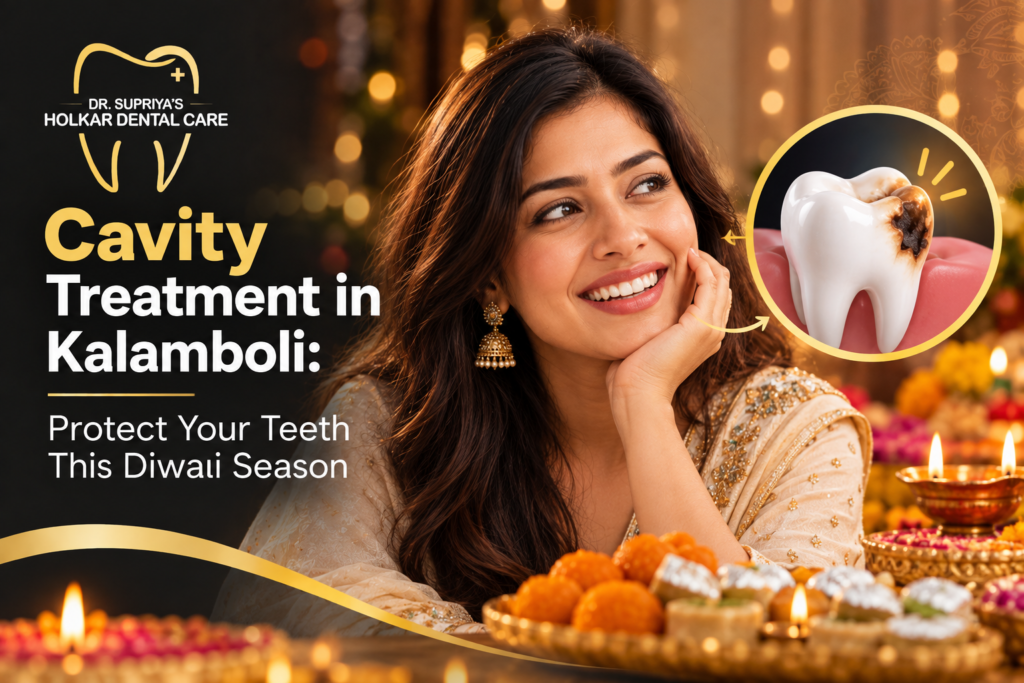
Laddoos at home, barfi from the neighbours, a Diwali gift box on every desk, and a second helping because it is a festival. The sweet season is lovely. It is also one of the busiest times of year for dentists.
If you live or work in Kalamboli, the sugar does not stop at home. Society get-togethers, office celebrations, family visits and late-night snacks all add up.
At Dr. Supriya’s Holkar Dental Care in Kalamboli, we often see what happens a few weeks after the festivities: fresh cavities and sudden toothaches. You can enjoy the festival and still protect your teeth.
How sugar damages teeth
Sugar does not hurt your teeth directly. The trouble starts with the bacteria in your mouth.
- You eat something sweet
- Bacteria feed on the sugar
- They release acid
- The acid softens enamel, the outer layer of your tooth
- Over time, a small hole forms. That is a cavity
Each time you eat sugar, your mouth stays acidic for a while. So how often you snack matters more than how much you eat at once. One dessert after a meal is easier on your teeth than a box of mithai nibbled through the day.
Why festival season is hard on teeth
- Constant snacking. Sweets and fried snacks sit on the table all day
- Desk grazing. Gift boxes at your workstation are easy to pick at for hours
- Sticky mithai. Chikki, jalebi, gulab jamun and soan papdi cling to teeth
- Late nights. Parties, travel and guests mean skipped night brushing
- Chai and coffee with sugar. Several cups a day keep teeth in contact with sugar
- Chocolates and cold drinks. Easy to grab and easy to forget about
Early signs of a cavity
Cavities rarely hurt at the start, which is why people miss them. Look out for:
- A white, brown or black spot on a tooth
- Sensitivity to sweets, hot or cold
- Food getting stuck in the same place again and again
- A rough edge or small hole you can feel with your tongue
- Bad taste or bad breath from one area
- Pain when you bite down
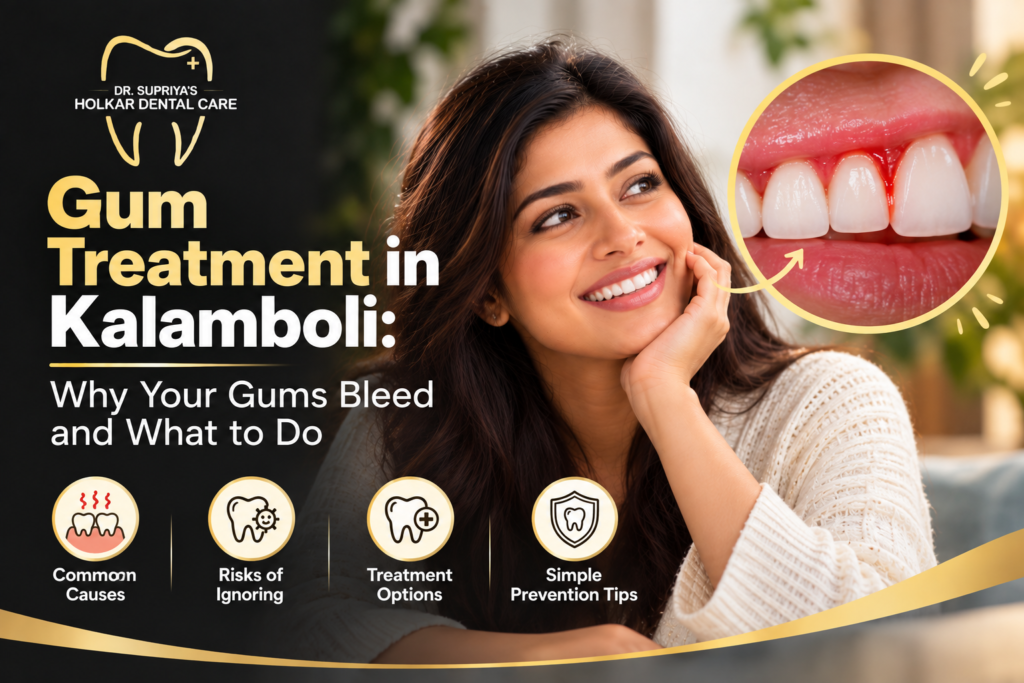
If you have noticed a dark spot on a tooth, do not ignore it. It could be an early sign of a cavity, and catching it now can save you from pain and bigger bills later.
If a tooth already aches on its own or at night, the cavity is likely deep. Do not wait for it to settle.
What happens if you leave a cavity alone
A small cavity is a quick fix. A large one is not.
- Small cavity: a simple filling, usually done in one visit
- Deeper cavity: a larger filling, or a crown to protect the tooth
- Very deep cavity: the nerve gets infected and needs a root canal
- Neglected for too long: the tooth may not be saveable
Each step costs more time, more money and more discomfort. The best time to treat a cavity is as soon as you spot it.
Cavity myths worth dropping
- “No pain means no cavity.” Wrong. Early cavities are usually painless
- “Only sweets cause cavities.” Not only. Chips, biscuits, bread and sugary drinks also feed the bacteria
- “Brushing harder removes cavities.” It does not. Hard brushing wears enamel and does not remove decay
- “A cavity will heal on its own.” Very early damage can be reversed with fluoride. A hole needs a filling
- “Baby teeth do not matter.” They do. Decay in milk teeth can spread and cause pain
Cavity treatment in Kalamboli: what we do at Holkar Dental Care
1. Examination
Dr. Supriya checks every tooth carefully. We use X-rays when needed, because cavities between teeth or under old fillings cannot be seen by eye alone.
2. Fillings
We remove the decayed part and fill the tooth with a tooth-coloured material that matches your natural shade. Local anaesthesia is used, so you should not feel pain.
3. Crowns
If a tooth is badly weakened, a crown protects it and restores its shape.
4. Root canal treatment
When decay has reached the nerve, a root canal saves the tooth and ends the pain. We try simpler options first and only recommend this when it is needed.
5. Preventive care
Cleaning, fluoride and guidance on brushing and food habits help stop new cavities.
If you are looking for cavity treatment in Kalamboli, Navi Mumbai, your first visit starts with a check-up and a clear explanation of what we see. Honest treatment, no scare tactics. You will know the plan before we begin.
About the cost of a filling
Many people delay treatment because they worry about cost. The cost of a tooth filling depends on the size and position of the cavity, the type of material and whether the tooth needs extra care.
What we can say for sure: a small filling now costs far less than a root canal and crown later. We explain the options and the cost before we start, so there are no surprises.
Festive season tips that work
- Eat sweets with a meal, not through the day
- Do not leave sweet boxes open on your desk. Move them out of reach
- Set a time for sweets instead of picking at the box
- Drink water after every sweet or snack
- Brush twice a day, and do not skip the night brush even when you are tired
- Floss once a day to clear sticky bits between teeth
- Do not brush straight after fizzy or sour drinks. Wait 30 minutes
- Have nuts, dry fruits or fresh fruit alongside the sweets
- Cut back on sugar in chai and coffee
- Keep a small travel toothbrush in your bag
Kids and family
Children are hit hard in festival season, and cavities in milk teeth are easy to miss.
- Give sweets after meals, not between them
- Help them brush at night until they are around 8 years old
- Use a pea-sized amount of fluoride toothpaste
- Check their teeth for white or brown spots
- Do not wait for pain. Children often cannot tell you what is wrong
A family check-up before or just after Diwali is a good habit.
Frequently asked questions
How do I know if I have a cavity?
You may see a spot on the tooth, feel sensitivity to sweets or notice food getting stuck. Many cavities have no symptoms, so regular check-ups matter.
Can a cavity heal on its own?
Very early enamel damage can be reversed with fluoride and better habits. Once a hole has formed, it needs a filling.
Does getting a filling hurt?
We use local anaesthesia, so you should not feel pain during the procedure. Mild tenderness afterwards is normal and fades quickly.
How often should I visit the dentist?
Every six months is a good rule for most people. If you get cavities often, you may need to come more often.
Do baby teeth need fillings?
Yes. Milk teeth hold space for adult teeth and help with chewing and speech. Decay in them can spread and cause pain or infection.
Is there a dentist near me in Kalamboli for cavities and fillings?
Yes. Dr. Supriya’s Holkar Dental Care is near D-Mart, Kalamboli, Navi Mumbai.
Book your visit
Enjoy the festival, and give your teeth a check-up before or after. A small cavity caught now is a short visit. Left alone, it can turn into a long and costly treatment.
Call +91 97697 62957 or visit www.drsupriyaholkardentalcare.in to book cavity treatment in Kalamboli, Navi Mumbai.
Clinic location: Near D-Mart, Kalamboli, Navi Mumbai